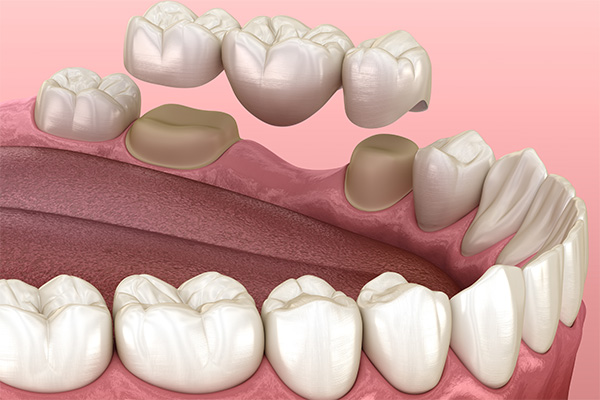
A dental bridge is an option for replacing missing teeth that creates a literal bridge from one remaining permanent tooth to the next. Traditionally, these bridges consist of a false tooth, or pontic, connected to a crown placed upon adjacent teeth on either side, although similar, but modified types of bridges do exist.
Types of dental bridges available
There are multiple types of dental bridges available, each having its benefits and disadvantages. It is best to speak with a dental professional to identify which type of bridge best fits your need.
- Traditional bridges: consist of a false tooth supported by crowns placed on the adjacent tooth on each side. Traditional bridges may consist of a series of false teeth and crowns.
- Cantilever bridges: include a single false tooth and a single crown placed on only one adjacent tooth. These are not considered as durable as traditional bridges.
- Maryland bonded bridges: involve a single or series of false teeth bonded to adjacent teeth with metal or porcelain wings, as opposed to crown placement.
- Implant-Supported bridges: are placed on top of surgically implanted titanium screws in the jaw that provide stability and health benefits of natural tooth roots.
Benefits of Dental Bridges
There are many benefits of dental bridges to be considered when choosing an option for replacing missing teeth.
A dental bridge can:
- Restore physical appearance altered by missing teeth.
- Restore proper speaking and chewing functions.
- Prevent shifting of remaining natural teeth.
- Slow jawbone deterioration and altered facial structure.
- Protect remaining natural teeth deterioration by more evenly distributing bite force.
Disadvantages of Dental Bridges
While dental bridges provide many advantages, that are disadvantages for any option for replacing missing teeth that also should be taken into consideration.
- Most types of bridges require healthy natural teeth to be altered for crown placement or wing bondage.
- Do not prevent jawbone reabsorption, which may need to be addressed with additional measures.
- Not a permanent solution and may need to be replaced after several years due to breakage, deterioration, or other factors.
- A dental professional can help you analyze both benefits and disadvantages of dental bridges to help you decide whether they are the best choice for you when considering options for replacing missing teeth.
How to care for a dental bridge
Dental bridges are a low maintenance option for replacing missing teeth, requiring only the daily maintenance of natural teeth, including brushing twice daily, flossing, the use of an antiseptic mouthwash, and regular professional cleanings. Additional care should be given when eating hard and sticky foods, depending on the type of bridge used.
How much does a dental bridge cost?
Several variables are used in determining the price of a dental bridge:
- Type of bridge.
- Number of teeth being replaced.
- Preparative work before bridge placement.
- Materials used to bridge creation and placement.
- Geographic location.
Many dental insurance plans will help with a percentage of bridge cost. Your dentist or insurance company may help you better understand your financial responsibility for bridge placement.
Related Posts
There are several dental implant options for replacing missing teeth. A dental implant permanently replaces a missing tooth, saving smiles and helping people eat their favorite foods for years to come. Unlike other options for replacing missing teeth, dental implants do not require regular check-ups from a dentist.The three most common types of dental implants…
Within the past few decades, advances in dentistry have resulted in many options for replacing missing teeth. While all of these options help restore functionality and appearance to a person’s mouth, they also differ in several ways. Depending on a patient’s dental history and lifestyle, one replacement option may be better suited for them than…
There are many options for replacing missing teeth, but how can replacing missing teeth help your oral health? Replacing missing teeth is the best way to prevent tooth decay, gum disease, and jawbone deterioration. Options for replacing missing teeth are dental implants, dentures, or dental bridges. Choosing which option will work best for you depends…